Yoga and stretching for your veins: exercises for varicose veins
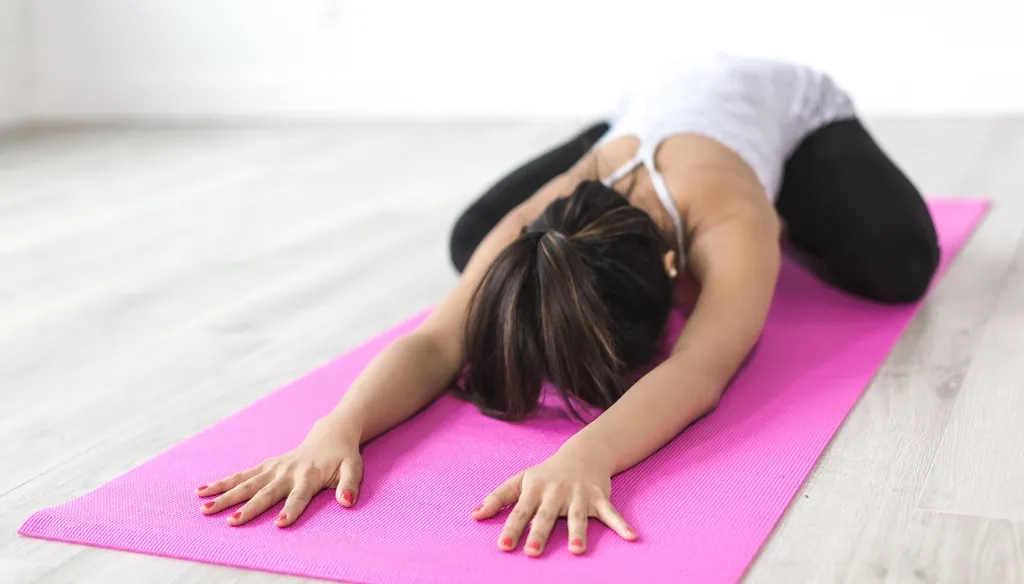
- Yoga does not remove enlarged veins, but gentle poses help blood flow and ease evening heaviness.
- The key elements are work for the feet and calves, belly breathing and legs raised above the heart.
- The 'legs up the wall' pose gives your veins almost everything a headstand would, without the risk.
- Headstands and shoulder stands only with an experienced instructor and no contraindications.
- Hot yoga, long sitting on your heels and holding your breath while straining do not help your veins.
An evening after a long day at the office or behind the wheel: your legs are humming, your ankles seem thicker than they were in the morning, and your socks have left deep marks. A friend invites you to a yoga class at a studio nearby, your feed is full of headstand videos, and you start to wonder: will this help your veins or harm them?
Yoga really can be a pleasant addition to looking after your legs, as long as you choose the poses wisely. Here are the yoga and stretching exercises for varicose veins that help blood flow, how to do them safely, and why it pays to be careful with inversions.
How can yoga benefit your veins?
Yoga on its own will not restore the elasticity of stretched veins or replace treatment. But it gently switches on several natural mechanisms that help blood return from the legs to the heart:
- The calf muscle pump. Every contraction of the calf muscles pushes blood up through the veins. Foot movements and heel raises keep this pump working.
- Gravity. When your legs are above your heart, blood drains from them with no extra effort and the heaviness eases.
- Breathing. Deep belly breathing changes the pressure in the chest and abdomen, which helps blood flow back to the heart.
- Ankle mobility. The more freely your ankle moves, the more effectively the muscle pump works.
To be honest, there are still few studies looking specifically at yoga for varicose veins. Its benefits for the veins rest on general principles that phlebologists have long known: movement, raised legs and avoiding long periods of stillness.
Before your first session: safety rules
A gentle routine suits most people, but in some cases you should talk to your doctor first. Be sure to check if you:
- have had deep vein thrombosis or vein inflammation (thrombophlebitis);
- have an open leg ulcer or have recently had a vein procedure;
- have high blood pressure, heart disease, glaucoma or problems with your neck;
- are pregnant, in which case you need a special programme and your doctor's approval.
Practise in a cool, well-ventilated room, in loose clothing without tight elastic at the ankles or below the knees. If your doctor has recommended compression stockings, ask whether you should wear them for exercise. Any sharp pain, numbness or cramp is a signal to stop.
A simple 15-minute routine to help blood flow
You can do this routine at home on a mat in the evening or after work. Move smoothly and breathe evenly, without holding your breath:
- Belly breathing on your back. Place a hand on your stomach and breathe for 2 minutes so that it gently rises as you breathe in and falls as you breathe out.
- Foot 'pump'. Still lying down, point and flex your feet alternately 20 times, then circle each foot 10 times in each direction.
- Knee to chest. Draw one bent leg at a time towards your stomach, hugging it with your arms, and hold for 3–4 calm breaths.
- Bridge. Bend your knees, place your feet hip-width apart and slowly lift your pelvis as you breathe out, lowering it as you breathe in. Repeat 6–8 times.
- Cat-cow on all fours: gently arch and round your back in time with your breath, 8–10 times.
- Downward dog with 'walking on the spot': press each heel alternately towards the floor to stretch your calves. If you should not lower your head below your heart, do the version with your hands against a wall.
- Standing heel raises: holding the back of a chair, rise slowly onto your toes and lower down 15–20 times.
- Finish with 'legs up the wall': lie by a wall and rest your straight legs on it for 3–5 minutes, arms relaxed out to the sides.
Inversions: is it safe to stand on your head?
It seems logical: the higher your legs, the better for your veins. But headstands, shoulder stands and the plough pose put a heavy load on the neck and sharply change the pressure in the blood vessels of the head and eyes. They are not recommended for people with high blood pressure, heart disease, glaucoma or other eye problems, neck injuries, during pregnancy or after recent surgery.
The good news is that you do not need to stand on your head to help blood drain from your legs. 'Legs up the wall' or legs on a pillow give a similar effect without straining your neck. If you still want to master full inversions, do so only under an experienced instructor and after talking to your doctor.
Which poses and habits are best avoided?
Some elements of yoga put extra strain on the veins. This is not a strict ban, but a reason to approach them with care:
- Long periods sitting on your heels or in lotus. Sharply bent knees squeeze the veins behind the knee. Do not stay in these positions for long, and alternate them with movement.
- Hot yoga in a heated studio. Heat widens the veins, and heaviness and swelling may get worse after such a class.
- Long static holds. Standing still in one position for minutes on end is something your veins get enough of in everyday life. Prefer flowing transitions.
- Holding your breath while straining. This sharply raises pressure in the abdomen, which is unhelpful both for leg veins and for haemorrhoids.
- Tight leggings with hard elastic at the ankles or below the knee.
How can you fit exercises for varicose veins into your day?
Regularity matters more than intensity. Fifteen minutes every day does more than an hour once a week. Here is how to spread the load:
- In the morning, while still in bed: a minute of the foot 'pump'.
- During the working day: short breaks to move every 45–60 minutes. You will find a ready-made set of moves in our article on leg exercises at your desk.
- After work: a walk at a comfortable pace. We have written separately about why walking is the best workout for your veins.
- In the evening: the mat routine and five minutes with your legs up the wall.
If you are interested in other sports too, have a look at our article on exercise with varicose veins, which explains which activities usually suit and which are best discussed with a phlebologist first.
When should you put exercise on hold?
Stop and see a doctor if during or after exercise you develop calf pain that does not go away, worsening swelling, dizziness or marked breathlessness. Do not resume exercise after a vein procedure until your doctor says you can.
The main points
Yoga for your veins is not about complicated poses or flexibility. It is about gentle movement, calm breathing and legs that are allowed to rest above the level of your heart. Start this evening with a few simple exercises and five minutes against the wall, then listen to your legs: chances are they will reward you with a pleasant lightness.
Sources: 1. De Maeseneer MG, Kakkos SK, Aherne T, et al. ESVS 2022 Clinical Practice Guidelines on the Management of Chronic Venous Disease of the Lower Limbs. Eur J Vasc Endovasc Surg. 2022;63(2):184–267.
Can I do yoga if I have varicose veins?
In most cases yes, as long as you choose gentle poses, move smoothly and avoid overheating. If you have had thrombosis, have a leg ulcer or recently had vein surgery, check with your doctor first.
Is 'legs up the wall' good for your veins?
Yes, it is a simple, safe way to help blood drain from your legs and ease evening heaviness. If your feet go numb, bend your knees or lower your legs onto a pillow.
Can I do a headstand with varicose veins?
Your veins do not really need it: 'legs up the wall' gives a similar effect. Headstands and shoulder stands are unsuitable with high blood pressure, glaucoma, heart or neck problems, and should only be done with an experienced instructor.
How often should I do exercises for varicose veins?
Little and often is best: 10–15 minutes of exercise plus a daily walk does more than occasional long workouts.
Is hot yoga safe with varicose veins?
It is better avoided: heat widens the veins and may worsen heaviness and swelling. Choose classes in a cool, well-ventilated room.