Winter shoes for varicose veins: choosing boots that won't hurt your legs
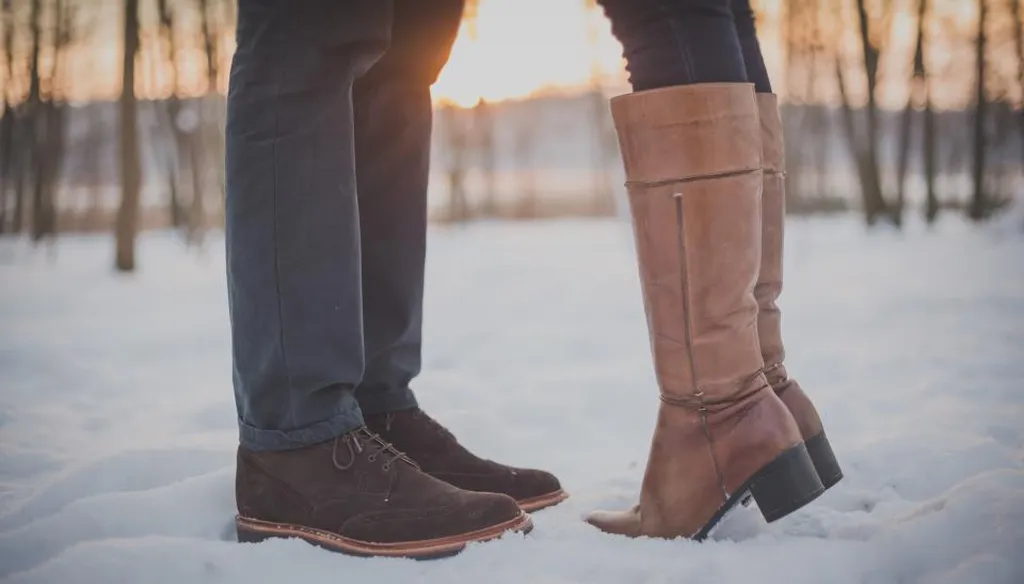
- A low, stable heel and a flexible sole let your calf muscle pump work at full strength.
- The boot shaft should not dig into your calf: a tight edge hinders blood flow out of the legs.
- Try boots on in the afternoon, wearing the socks you plan to wear in winter.
- In a warm office or on public transport, swap your boots for lighter shoes so your legs don't overheat.
- Sudden swelling and pain in one leg means calling 103 straight away, not changing your shoes.
The first wet snow falls in Tashkent, and shoe shops suddenly fill up. We usually choose boots with our eyes: do they look good, are they warm, do they go with the coat? Only later, when our legs are throbbing in the evening, do we remember that we will take thousands of steps in them, stand at bus stops and spend whole days in an overheated office.
Winter footwear matters for your veins, especially if you already have varicose veins, spider veins or a tendency to swelling. Let's look at what makes good shoes for varicose veins in the cold season, what to check in the shop and how to keep your feet warm without overheating them.
How do shoes affect the way your veins work?
Blood travels from your legs back to the heart against gravity, and your muscles help it along. With every step the calf muscles contract and squeeze blood upwards out of the deep veins, while valves stop it from flowing back. Your foot has its own small pump too: when you put weight on the sole, the veins of the foot empty.
These pumps work best when your foot rolls freely from heel to toe and your ankle moves without restriction. A high heel almost locks the ankle in place, a narrow toe and a stiff sole disrupt your stride, and a tight boot shaft squeezes the veins. Unsuitable shoes do not cause varicose veins on their own, but they can noticeably worsen heaviness and swelling if your veins are already weakened.
Which heel height is safe for your legs in winter?
The most vein-friendly option is a low, stable heel of roughly 2–4 centimetres with a broad base. It takes a little load off the heel without stopping your ankle from working. In winter it has another advantage: on an icy pavement it is far more reliable than a stiletto.
- Save stilettos and high platforms for a warm hall: they are dangerous on ice, and long walks in them overload the calves and all but switch off the muscle pump.
- A completely flat, thin sole is not ideal either: your feet tire faster and the arch gets no support.
- If you can't do without heels at a New Year office party or a winter wedding, arrive in comfortable boots, carry your heels with you and put them on for the most festive part of the evening.
We explained why wearing high heels all the time strains the veins in our article on the love of high heels.
Why shouldn't the boot shaft press on your calf?
A tight shaft acts like a tourniquet: it pinches the surface veins at one level and makes it harder for blood to flow out. That is the key difference from medical compression, where the pressure is graduated, strongest at the ankle and gradually lower further up. Random pressure from a boot does not help your veins; it gets in their way.
- Once the boot is zipped up, check that you can slide two fingers between the shaft and your calf.
- Choose adjustable styles: a full-length zip, laces or elastic gussets help you adapt the width.
- Remember that your calves and ankles swell slightly by evening, and in winter you wear thick tights or warm trousers under your boots.
- Watch out for a hard edge just below the knee: if it leaves a red line on your skin after a walk, choose ankle boots or a style with a soft top instead.
How should you try on winter shoes?
A good pair starts with a proper fitting. A few simple steps will help you get it right:
- Go shoe shopping in the afternoon: by then your feet have swollen slightly, so boots that fit comfortably in the shop won't feel tight by evening.
- Take the socks or tights you will wear in winter. If your doctor has prescribed compression stockings, try the shoes on with them.
- Try on both boots: feet often differ slightly in size, and you should go by the larger one.
- Check that your toes can wiggle freely and that your heel doesn't slip out as you walk.
- Walk around the shop for a few minutes, on stairs or a slope if possible. Nothing should press, rub or dig in.
- Bend the sole with your hands: a good sole flexes at the front, where your toes bend, while the heel counter stays firm and holds your heel.
Soles and materials: warm, dry and non-slip
- A thick sole keeps your foot away from the cold ground. This matters most for people who stand outdoors for long periods: bazaar traders, drivers, anyone waiting for a bus every morning.
- A deep tread reduces the risk of slipping. A fall on ice can mean an injury, and after an injury you have to move less for a long time, which does your veins no good either.
- The upper should be waterproof yet breathable. In slush, wet feet get cold quickly, while in sealed synthetic boots they sweat and overheat.
- A removable insole is a bonus: if you have flat feet, an orthopaedic specialist can recommend a custom insole, and you will have room to fit it.
- Very soft, flat boots without a supportive structure are cosy for short trips, but for long daily walking they don't give your feet enough support.
Warm but not overheated: why keep a spare pair of shoes?
In winter your legs often suffer not from the cold but from overheating. In the morning you go out in fur-lined boots, then ride a warm metro, then sit all day in a heated office. Heat widens the veins, blood flows back more slowly, and by evening heaviness and swelling appear.
- Keep a spare pair at work: light closed shoes or loafers with a low, stable heel.
- At home, wear comfortable slippers with a back rather than mules you have to grip with your toes.
- Don't warm your feet by a heater or rest them on a hot radiator to warm up faster.
- Choose warm socks with a soft band: a deep mark on your skin is a sign that the band is too tight.
Even in the most comfortable shoes, your legs need movement. It is easy to get too little in winter, so a walk in good weather and the stairs instead of the lift remain your veins' best friends; read more in our article on walking for healthy veins.
When is leg discomfort a reason to see a doctor?
If you still get heaviness, ankle swelling, night cramps or visible enlarged veins by evening even in comfortable shoes, book an appointment with a phlebologist. Our article on evening leg swelling explains why legs swell at the end of the day and what to do about it.
Tell your doctor separately if your toes are often cold and pale or go numb, or if your calves start to hurt when you walk and ease when you rest. This may be related to your arteries rather than your veins, and it affects, among other things, whether compression stockings are suitable for you.
In short: warm feet and a light step
Good winter shoes for varicose veins mean a low, stable heel, a shaft that doesn't squeeze, a non-slip sole and a spare pair for warm rooms. Spend an extra ten minutes on the fitting, and your legs will thank you with lightness all the way to spring.
Sources: 1. De Maeseneer MG, Kakkos SK, Aherne T, et al. ESVS 2022 Clinical Practice Guidelines on the Management of Chronic Venous Disease of the Lower Limbs. Eur J Vasc Endovasc Surg. 2022;63(2):184–267.
What heel height is best for varicose veins?
A low, stable heel of roughly 2–4 cm with a broad base is usually the most comfortable. Save stilettos and high platforms for short outings, especially in winter when it is slippery.
Can I wear compression stockings under winter boots?
Yes, if your doctor has prescribed them. Try the boots on with the stockings and choose a roomy shaft so that the boots don't add pressure on top.
Why do my feet get cold faster in tight boots?
Tight shoes squeeze the foot, hinder blood flow and leave no warm layer of air. If your feet are cold even in roomy shoes, or your toes turn pale or numb, see a doctor.
Are soft, flat boots suitable if I have varicose veins?
They are fine for short trips, but for long daily walking they don't support the foot well enough. Choose styles with a firm heel counter and a small heel.
Do I need a spare pair of shoes at the office in winter?
Yes, it is a simple way to avoid overheating your feet in fur-lined boots all day. Light closed shoes with a low, stable heel are a good choice.